AI sales calls: how AI agents turn phone leads into revenue
 Yael Chen ZionContent Marketing Lead
In this article
TLDR
AI sales calls are phone conversations in which an AI agent talks with a lead or customer, answers questions, recommends products, takes the order, and brings in a live rep when needed. Agents then follow up by text and email, so a single call becomes the start of a relationship. At Omaha Steaks, Simple AI sits in front of 100% of sales calls and handles 78% of them end-to-end.
The holiday season sends Omaha Steaks a surge of people calling to order gifts. Today, Simple AI handles 78% of those calls end-to-end, with a 30% higher upsell rate than their human reps. With most basic interactions handled, the team’s time goes to the conversations where it matters most.
That is what AI sales calls look like when they work. In a business where a large share of revenue closes over the phone, every call depends on how quickly and how well someone responds. An agent that only answers the phone isn’t enough. It has to hold a natural-sounding conversation, close the sale, and keep the relationship going.
What are AI sales calls?
AI sales calls are phone conversations where an AI agent speaks with a lead or customer, answers questions, recommends products, and works toward an order or appointment. The agent talks conversationally, uses existing knowledge about the customer, and brings in live reps when the conversation calls for them.
Most people picture a phone tree or an autodialer reading from a script. An AI agent works differently: it understands what the caller said and responds in the moment, resulting in a natural and effective conversation. When an agent works across channels, it’s able to follow up through text and email to keep the relationship going.
What does an AI agent actually do on a live sales call?
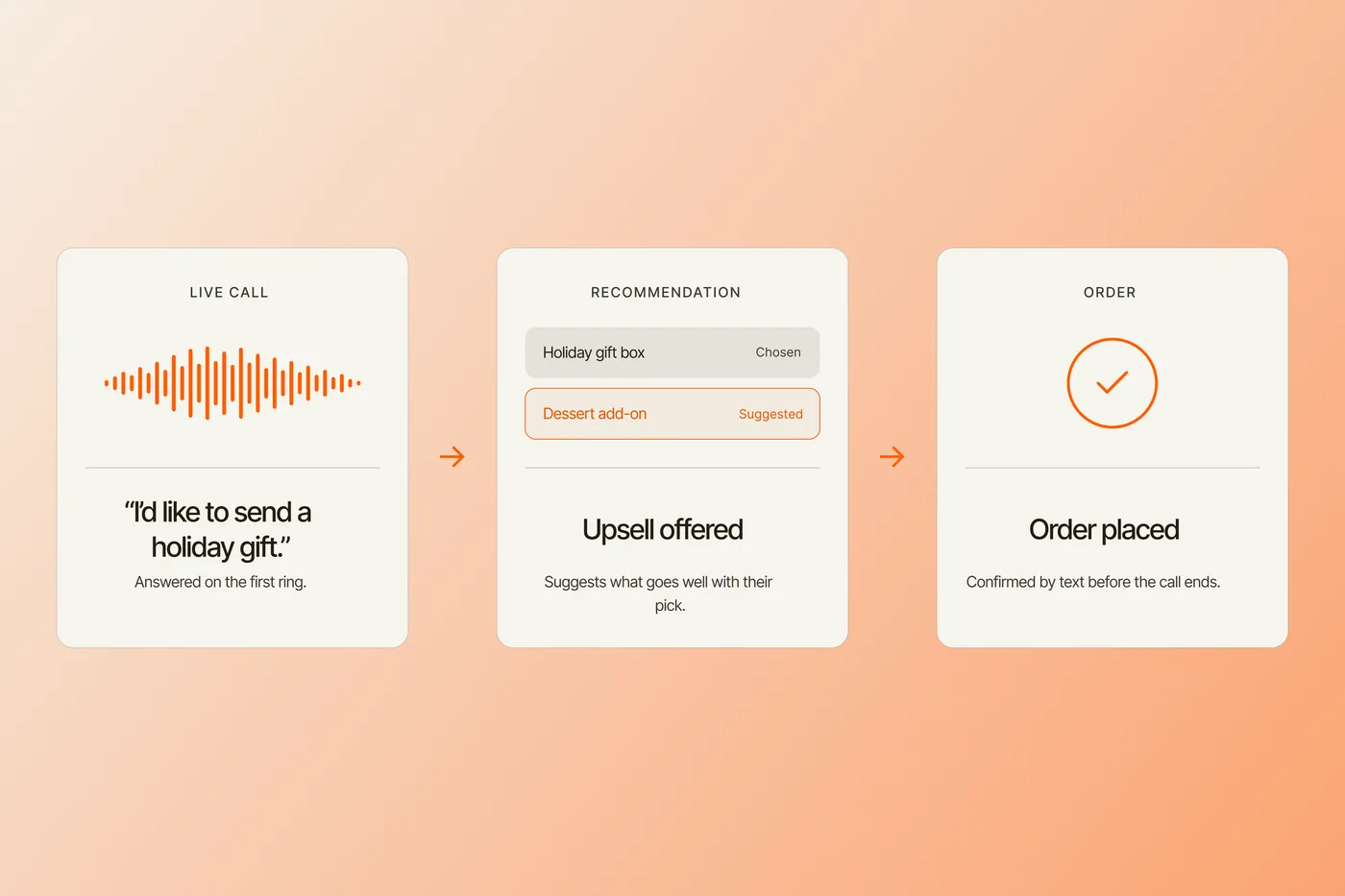
On a live call, an agent greets the caller, answers product questions, suggests upsells, and takes the order inside your systems, all while still on the line. A successful sales agent also listens for when a caller is done speaking, so it doesn’t talk over someone who is about to say yes.
Take a caller buying a holiday gift. The agent asks who it’s for, recommends a few options, and mentions what goes well with the one the customer chose. Once they decide, the agent places the order in the systems your team already uses, and confirms the details by text before the caller hangs up.
Can AI handle inbound and outbound sales calls?
Yes. On inbound calls, the agent answers the moment the phone rings, including nights, weekends, and holiday surges. On outbound calls, it works through the leads your team hasn’t had time to call, and follows up on quotes and past customers. Both run on the same memory of each customer.
Renewal by Andersen: overnight calls and the leads no one had time to call
At Renewal by Andersen (RbA), Simple answers calls overnight, when no one on the team is available, and follows up on leads the team never got around to. Our AI sales agent page shows how it works across inbound and outbound.
How does an AI sales agent qualify a lead and hand off to a person?
The agent asks the questions your best rep would ask, covering what the customer needs and when they want it, and qualifies the lead as the answers come in. When a lead is ready for a person, or asks for one, the agent transfers the call with the full conversation attached so nobody has to start over.
Qualifying and handing off comes down to three things:
- Qualifying as the conversation flows. The agent asks about the customer’s needs, timeline, and situation in the order that suits the conversation, rather than walking them through a form.
- Deciding who takes it from there. When a lead is ready to buy, asks for a person, or raises something the agent shouldn’t handle, the agent transfers the call to a teammate.
- Handing over the context. The teammate sees what was discussed before picking up, so the customer never repeats themselves.
Your reps end up spending their time on conversations that are already warm instead of working a queue from the top. See our lead qualification page for how this works in practice.
What happens after the call?
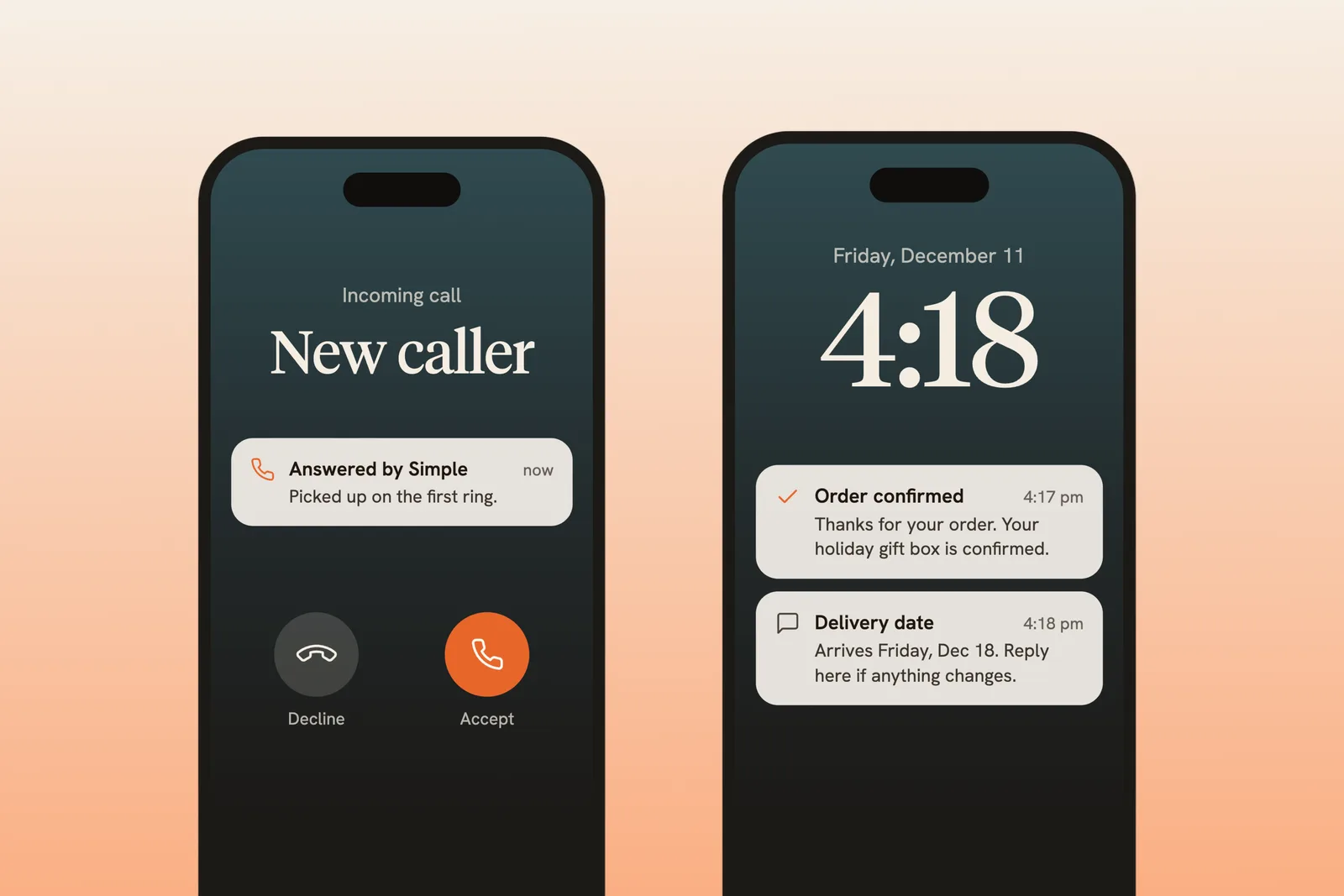
After the call, the agent follows up on the channel the customer prefers. It texts a confirmation or the next step, emails details someone asked to see, and reaches out again when the customer is ready to buy, so one phone call becomes a relationship that runs across phone, text, and email.
For Empire Today, that follow-up runs across the whole journey. Before a purchase, the agent answers questions about products and installation. Once a customer books, it confirms the consultation and the install date. Months later, it checks in to build rapport and offers to help with the next room.
At JG Wentworth, the same approach carries applicants through a multi-step application over phone and text. Simple keeps following up until the application is complete, so a customer who stopped halfway doesn’t have to start over or remember where they left off.
How to start without risking revenue
Start with an AI sales agent partner that you trust. At Simple, we build the agent with you, test it against real calls, and widen its scope as the numbers support it. Because our pricing follows your business outcomes, we only do well when your calls do.
The takeaway
AI sales calls work when the agent does more than pick up. It holds a natural conversation, qualifies leads and hands them to your team, and follows up by text and email until the customer is ready to buy.