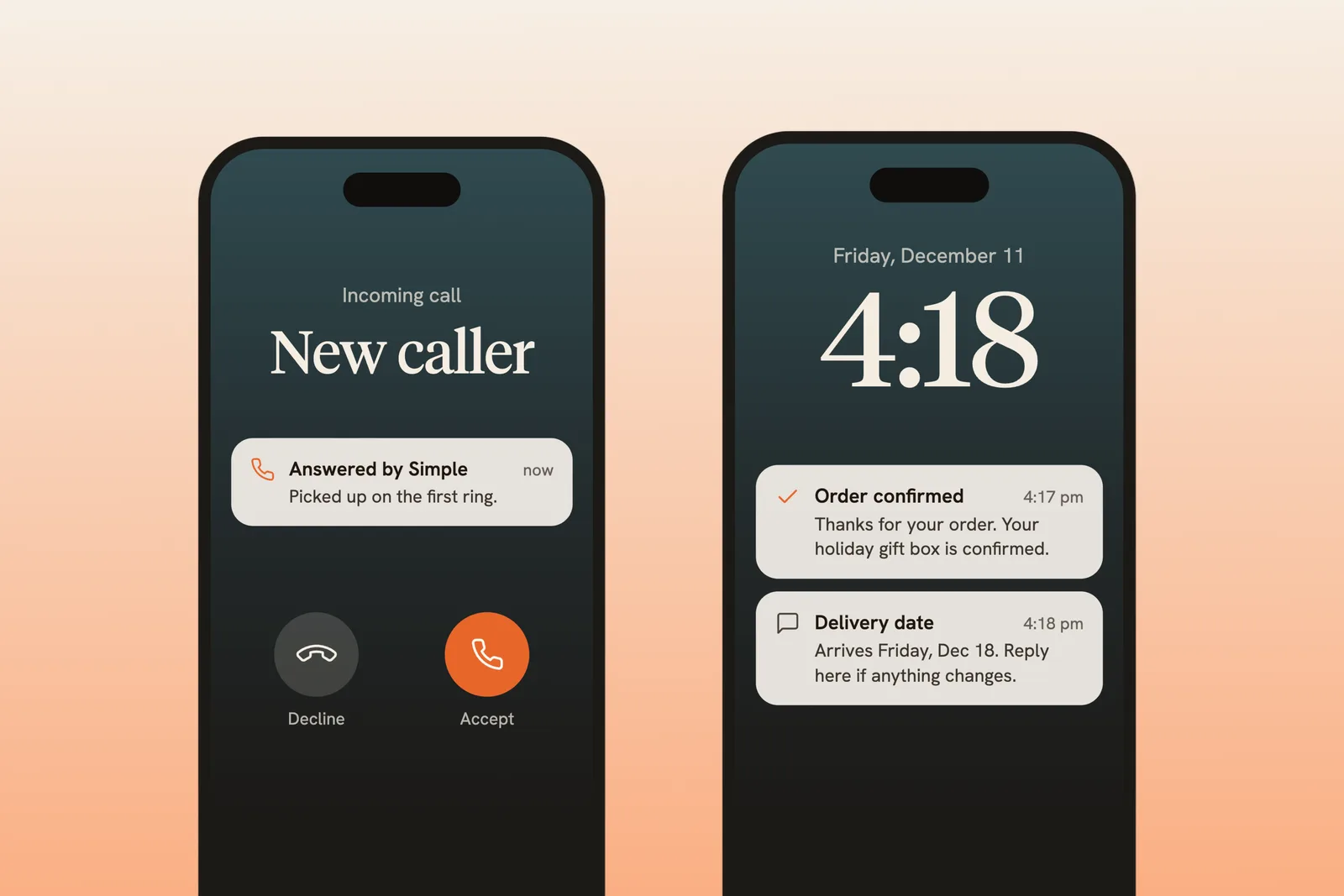
AI for home services: from the first call to the next room
 Yael Chen ZionContent Marketing Lead
In this article
TLDR
AI for home services means an AI agent that follows a homeowner from the first question to the next project. It answers questions before the purchase, books and confirms the consultation, confirms the install, and checks in months later about the next room. Renewal by Andersen used one to set appointments that brought in a reported $400K in new revenue in a single week of testing.
For a brand selling windows or flooring, the sale rarely ends with the first call. Homeowners ask questions, book consultations, wait for installs, and often come back for other rooms months later. Every one of those steps is a chance for a homeowner to drift off, and keeping up with all of them is a lot to ask of a team that’s busy juggling many different responsibilities.
How is AI used in home services?
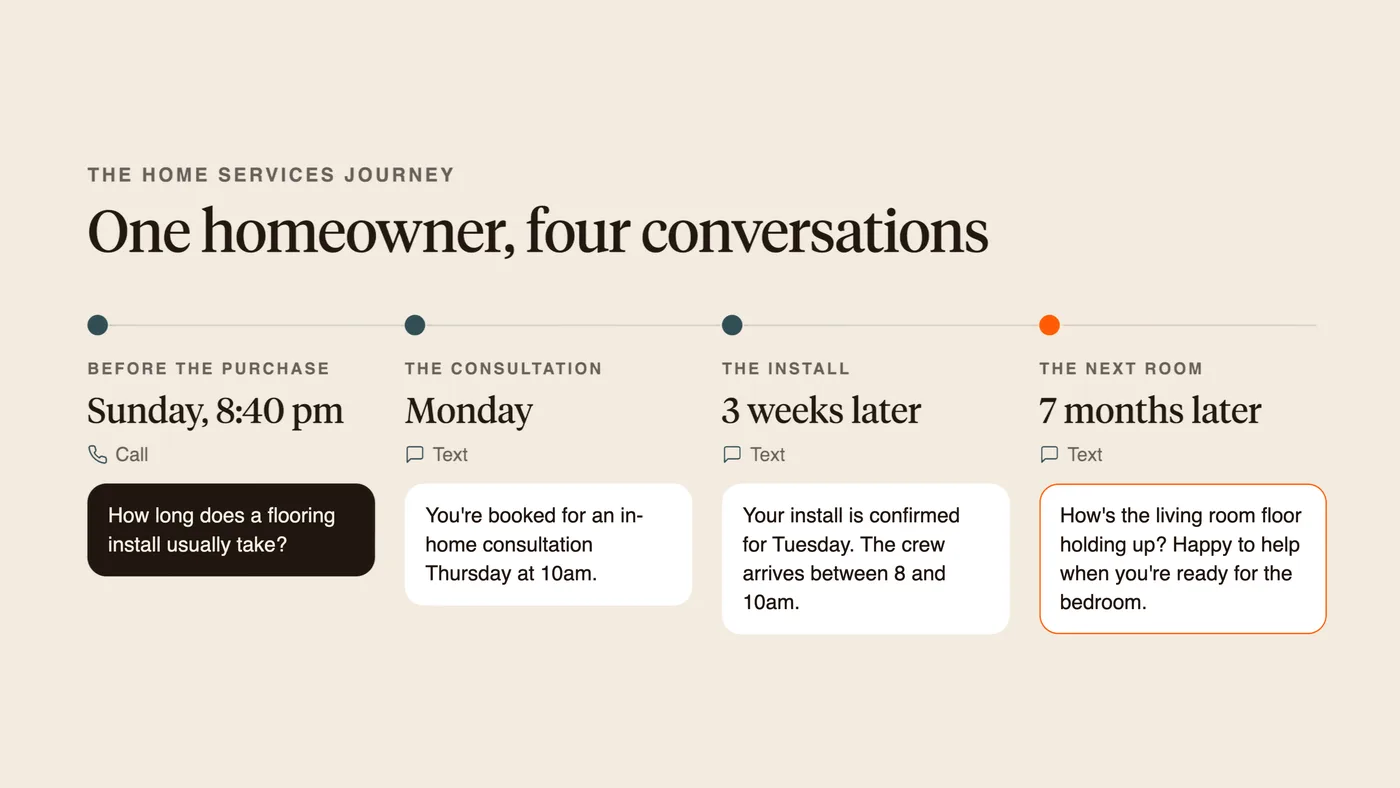
AI in home services means an AI agent talks with homeowners by phone, text, and email at each stage of the buying journey. It answers questions before a purchase, books and confirms consultations and installs, and follows up months later about a potential next project. The agent works inside the brand’s own systems, and brings in live reps when needed.
Windows, flooring, and similar projects are large decisions with a long stretch between the first question and the final appointment. Agents need to remember where each homeowner is in their journey, what their preferences are, and what their future plans may be. That’s where high-quality agents make the difference: look for vendors that emphasize persistent memory, customer profiles, and omnichannel support.
Stage 1: pre-purchase questions
The first thing a customer comes to your business with is questions. How long will the install take? Does the crew haul away the old flooring? What happens if the measurements come out differently than expected? Your reps are trained to answer these, but only during office hours (and when they’re not busy with other tasks). What happens if they call at 9pm or Sunday afternoon, when no one is there?
Businesses without a solution to this problem are more likely to lose these opportunities, since customers are often shopping from multiple vendors at the same time. The first to respond tends to be the one to close the deal (you might know this as speed to lead). But not all solutions are created equal: Renewal by Andersen used to spend $10,000 on an after-hours call center that frequently misrouted and mishandled their calls.
An AI agent solves this by picking up whenever your office is closed, answering questions based on information your team has approved. Because it responds right away, you’re far more likely to be the first company a customer hears from, and because it keeps a record of the conversation, your rep picks up where it left off instead of starting from scratch every time.
Stage 2: booking and confirming the consultation
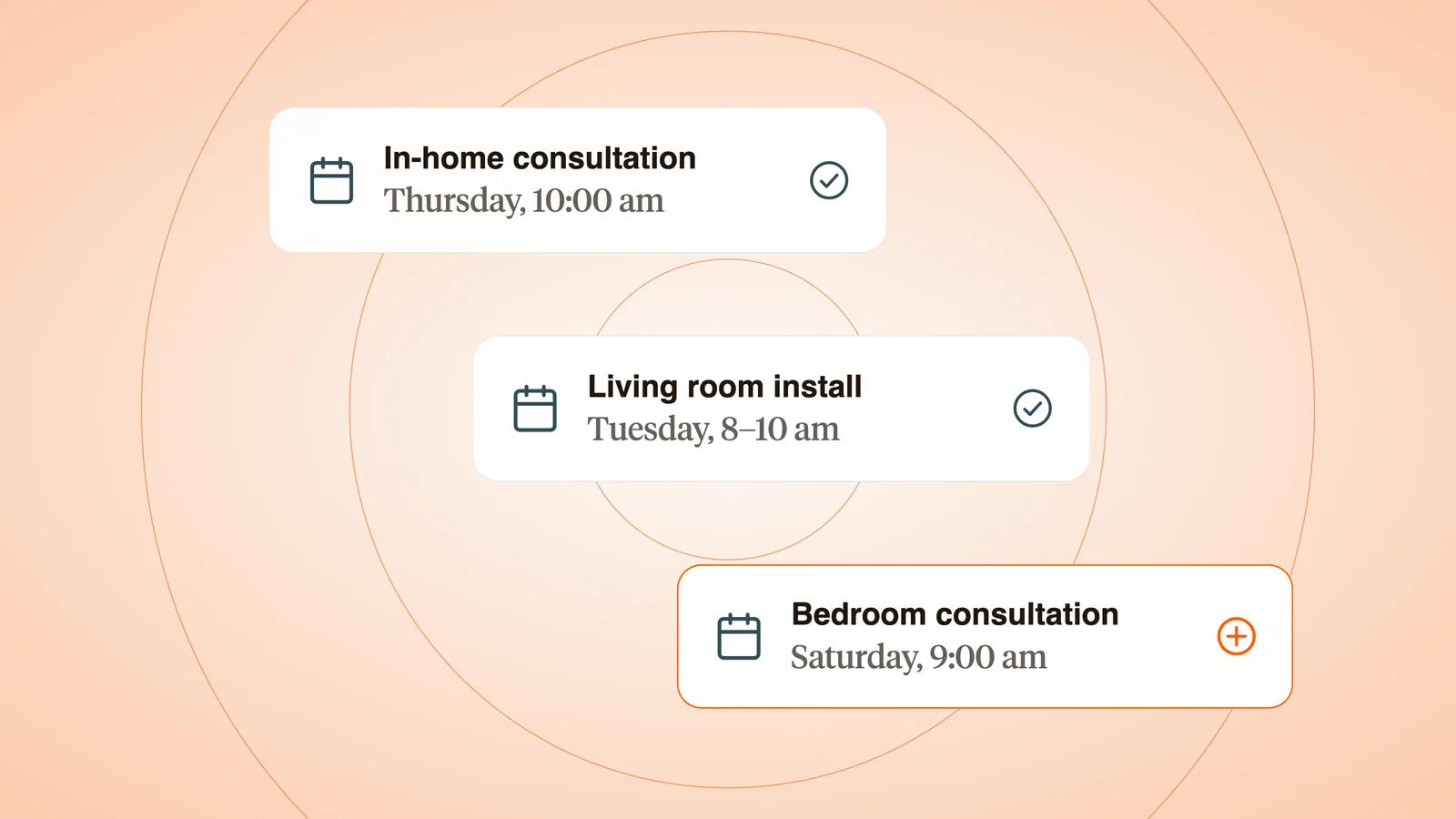
An AI sales agent can book in-home consultations during a call or text thread, check leads against the team’s criteria and calendar, and confirm visits beforehand. When a homeowner asks for a human, it transfers the call to a live rep.
Getting a consultation on the calendar is where a lot of leads quietly go cold. A homeowner who agrees to next steps still needs a time that works for them and for your consultant, and if nobody follows through, the moment passes. Leads from aggregators are even more fragile, since the same lead is often sent to several companies at once. So the agent has to work the way you sell: from your real calendar (only offering times your consultants can keep), your lead criteria (service area, project types, do-not-call rules), and the CRM your team already uses (so bookings show up where your reps are looking).
Renewal by Andersen: working the leads no one had time to call
Renewal by Andersen (RbA) of Central Pennsylvania had all of these problems. Its old call center once mistakenly booked Texas leads for a Central Pennsylvania team, and aggregator leads in one market never got called at all. They started with overnight calls, which were the company’s biggest pain point. When their CRM didn’t work with other software, Simple built custom browser automation to operate inside it.
After that, the team pointed the agent at old leads. Reps get each new lead for the first week. If it’s still sitting there, the agent calls and sends a text, calls again the next day, and calls a third time the day after with a voicemail. In one week of testing, the appointments the agent set from those outbound and after-hours calls brought in $400K in new revenue. Over the first six months, the total reached $1.07M.
Stage 3: confirming the install
After the order is signed, the questions often keep coming. An AI agent can reach out ahead of the install, confirm the date and arrival window, explain how to prepare, and flag any change to your team. These conversations also build the customer’s history (what they ordered, when it went in, what they care about), which feeds directly into Stage 4.
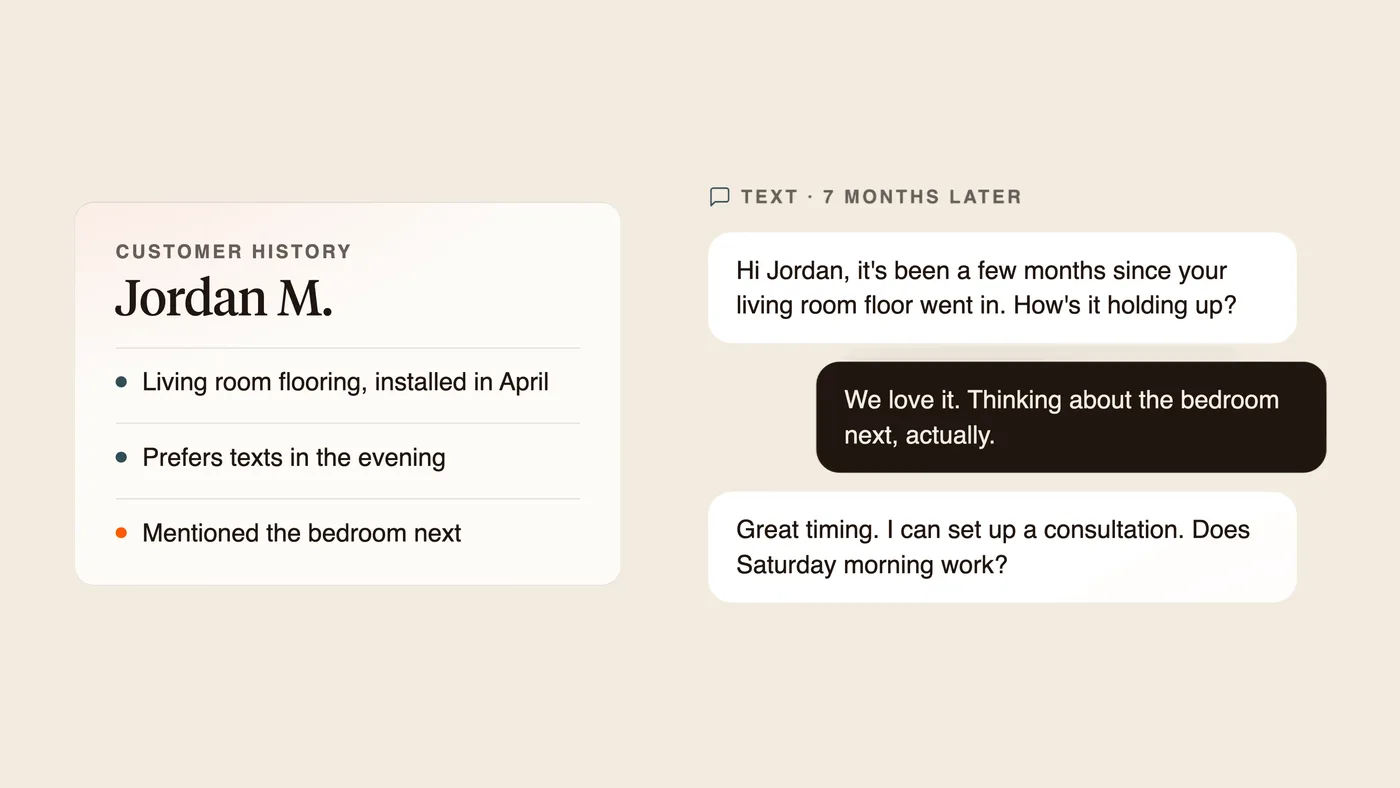
Stage 4: the follow-up
Months after an install, a customer often goes quiet, even though they already know your process, your installers, and how their project turned out. An AI agent can check in on its own to see how the project went, build rapport, and offer help with the next room, using what it already knows about the customer. A message that mentions the living room finished last spring feels like a check-in. If the customer is interested, the agent can book the next consultation the same way it did the first.
What to measure at each stage
Each stage has its own number, and it’s worth tracking them separately. A great answer rate on first calls can hide a weak confirmation step.
| Stage | What to watch |
|---|---|
| Before the purchase | How quickly a homeowner gets an answer, and how many inquiries turn into booked consultations |
| Booking and confirming | Consultations booked and kept, including those set after hours and from older leads |
| Confirming the install | Installs that go ahead on the date the customer was given |
| The next room | Returning customers who book another project, and their lifetime value |
The takeaway
An AI agent can now cover the whole journey when it comes to home services. Along the way, it solves problems most home improvement teams already live with: questions that go unanswered after hours, leads that sit uncalled, consultations that never get confirmed, install dates that change without notice, and past customers who never hear from you again. Because the agent works every one of those conversations, at any hour and on whichever channel the customer prefers, fewer customers fall through the gaps between stages. And because it remembers each homeowner’s history, customers feel like they’re talking to an agent who knows them.
This is where revenue comes from. Faster answers mean you’re more likely to be the first business a customer hears back from, booked and confirmed consultations give more leads a chance to become visits, and follow-ups bring past customers back for their next project.